Some links on this page are affiliate links. If you buy through one, we earn a small commission at no extra cost to you. As an Amazon Associate we earn from qualifying purchases. Full disclosure.
Every spring, local listings fill up with complete beehives for sale: boxes, comb, bees, and all. Usually the seller is leaving the hobby, downsizing, or moving house, and the price often looks like a bargain next to buying everything new.
Sometimes it genuinely is. A complete hive is the fastest route there is to a working colony, and it comes with the one thing money cannot easily buy, which is drawn comb. It is also the easiest way to inherit somebody else’s problems, including one that can persist in the woodwork for decades.
This guide covers when a full hive is worth buying, what to inspect, the paperwork most buyers never think to ask for, and what a fair price looks like. If you are still weighing your starting options generally, our buying bees and nucs guide compares packages against nucs.
What you actually get
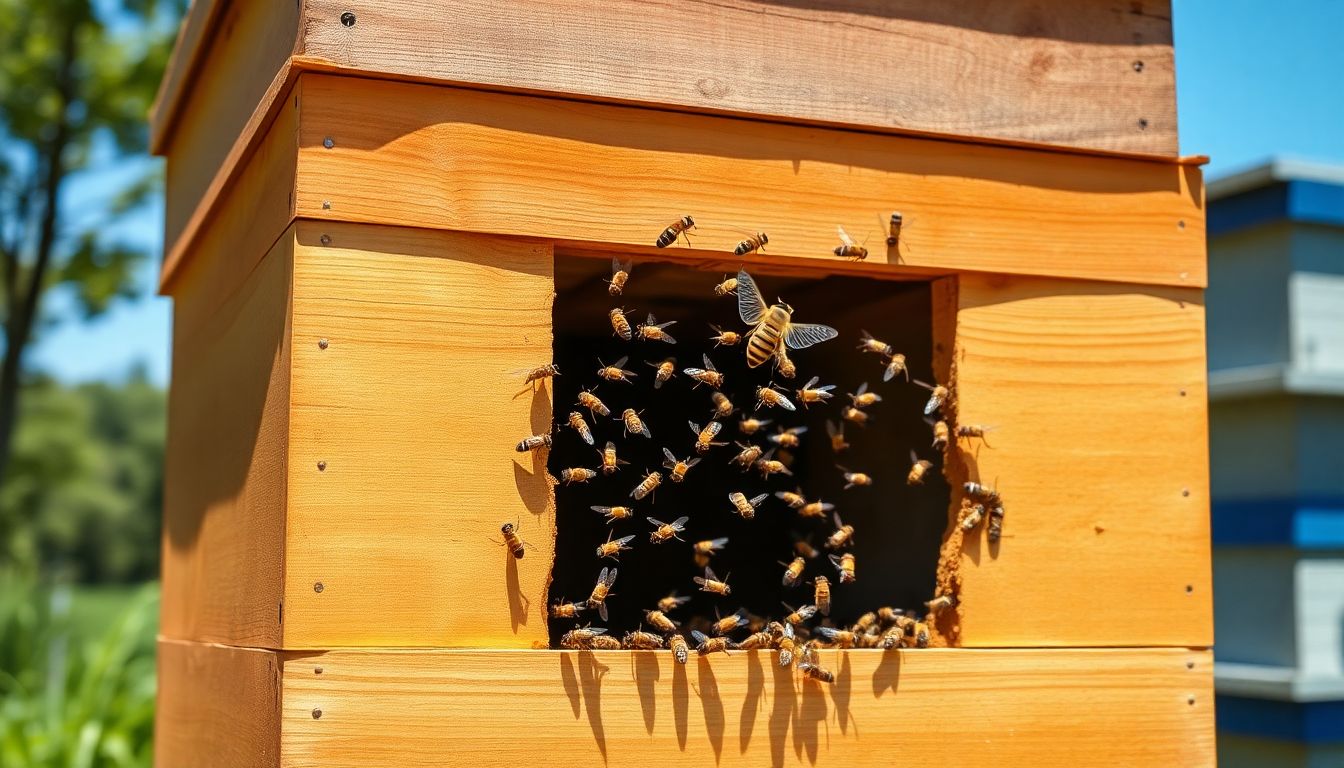
A complete hive purchase usually means the boxes, frames, bottom board and covers, an established colony with a laying queen, brood at every stage, and whatever honey and pollen they have stored.
The part worth paying for is the drawn comb. Bees expend an enormous amount of energy converting honey into wax, and a colony that arrives with comb already built is weeks or months ahead of a package starting on bare foundation. That head start is the honest argument for buying established.
Check what is actually included before you agree a price. Some sales are two deeps and nothing else, others come with supers, a stand, and spare equipment. Our Langstroth hive guide covers what the boxes should be and which sizes interchange, which matters if you already own equipment.
When buying a full hive makes sense
It is a good move when several things line up. You want a producing colony this season rather than building one from scratch. The seller is local and reputable, so you can inspect in person and ask questions. The total price genuinely beats a nuc plus new equipment. And ideally you have a mentor or club member willing to look at it with you.
It is a poor move in a few specific situations. As an absolute first colony with nobody experienced to inspect it, you are gambling on equipment you do not yet know how to assess. If the seller has no health paperwork, no inspection history, and vague answers about mite treatment, the discount is not worth it.
Fall deserves its own warning. A colony bought in autumn has to survive winter immediately, on stores you did not build and with a mite load you did not manage. Most experienced beekeepers steer beginners toward spring purchases for exactly that reason.
The disease risk that makes used comb different
Buying a used hive is not like buying a used lawnmower, and the reason is American foulbrood.
AFB is a bacterial brood disease that spreads by spores, and those spores are remarkably durable. They survive roughly three to ten years on surfaces inside a hive, with persistence reported up to around 35 years, and they can lie dormant in stored equipment longer still. Comb that looks perfectly normal can carry them.
The uncomfortable part is that a seller does not have to be dishonest for this to happen. Someone can believe in complete good faith that their hive is clean, having never seen an obvious outbreak, and still hand you contaminated comb.
There is also a specific piece of false reassurance worth recognising. If a seller tells you the hive was treated with oxytetracycline, that does not clear it. OTC is approved for European foulbrood, it is not a legal treatment for AFB control, and it does not kill AFB spores. At best it masks symptoms while the spores remain.
So do the due diligence. Ask for inspection records and treatment history in writing where you can. Do not buy from anyone who has had AFB in their apiary, regardless of what was done afterward. During inspection, use your nose as well as your eyes, since a foul or decaying smell is a serious warning sign. And know that gamma irradiation genuinely does sterilise used equipment, with some beekeeping clubs organising irradiation events that members can use. Our bee health and pests guide covers what foulbrood looks like and why it is treated so seriously.
Ask for the paperwork
Most buyers do not know this exists, and it is one of the better protections available.
A number of states legally require a certificate of health, or a signed affidavit, before bees on comb, hives, or used equipment containing comb can be sold. Virginia, for example, requires a certificate of health issued by the Office of Plant Industry Services prior to sale. Texas requires sellers of queens, packages, colonies, and nucs to provide a health certificate from the state inspection service or, failing that, an affidavit certifying the health of the bees with every sale. Moving hives across state lines frequently requires an entry permit from the destination state along with proof the bees are free of disease.
Those are examples rather than universal rules. Requirements vary considerably from state to state, so check what applies where you live and where the hive is coming from. Your state apiarist or agriculture department is the authority, and your local club will usually know the process.
The practical rule is simpler than the regulations. A seller who can produce inspection history and paperwork is telling you something reassuring about how they kept bees. A seller who cannot or will not is a walk-away, whatever the price looks like.
What to inspect before you pay
Open the hive with the seller, in daylight, and work through the same checks you would on your own colony.
- Equipment condition: exterior surfaces painted, no wood rot, and box and frame corners snug rather than loose or wobbly.
- Smell: a hive has a distinctive scent of wax and propolis, but it should never smell foul or of decay.
- The queen: the seller should be able to find and identify her fairly quickly and pull frames without difficulty. Hesitation to open the hive properly is itself informative.
- Brood: eggs, larvae, and capped brood all present, in a tight pattern rather than a scattered, spotty one.
- Population: enough bees to fill the spaces between the frames, not a sparse colony rattling around in two boxes.
- Temperament: calm and workable during the inspection rather than immediately defensive.
- Comb age: blackened, heavy old comb is due for rotation, so factor that work into the price.
- Mite history: ask directly what monitoring and treatment has been done and when.
Our beehive inspection guide covers reading a brood frame properly, and our varroa mites guide explains what answers about mite management should sound like.
Above all, bring someone experienced. The consensus among beekeepers is that an experienced pair of eyes at the inspection is the single best protection against buying a problem, and most club members will happily come along for the afternoon.
What to pay
An established hive with bees typically runs $250 to $400, depending on the age and condition of the equipment, the strength of the colony, and whether supers, a stand, or spare boxes are included.
Run the comparison honestly before deciding it is a deal. A nuc costs $180 to $250 and a new hive around $270, so a full setup bought new lands close to the same money and comes with no disease history and no old comb. A secondhand hive is a bargain when the equipment is sound and the colony is strong, and poor value when you are paying near-new prices for tired boxes and comb that needs replacing. Our beekeeping cost breakdown sets the numbers side by side, and our best beehives guide covers what new equipment costs.
Moving it home
Buyers rarely think about transport until the day, and it is the part most likely to go wrong.
Move the hive at night or very early in the morning, when every forager is home. Moving in daylight leaves a cloud of bees at the old site with nowhere to return to. Close the entrance with an entrance screen or a strip of foam so the colony has ventilation but cannot get out, then strap the boxes together so nothing shifts and shears the comb in transit.
Keep the hive level in the vehicle and drive gently. Heavy jolts break comb loose, which can crush bees and, in the worst case, the queen.
There is also a rule worth knowing before you plan the move. Bees orient precisely to their hive location, so a move of less than about three feet, or more than about three miles, is clean. A move somewhere in between leaves returning foragers hunting for a hive that is no longer where they left it. If the new site is a mile away, most beekeepers move the hive well beyond three miles first, leave it a few weeks, then bring it back.
What to do in the first weeks
You have inherited another beekeeper’s management, so verify rather than assume.
Do a mite count straight away with a varroa test kit rather than trusting that the colony is clean. It is the single most useful thing you can learn about a hive you did not raise, and it tells you whether you need to act before winter.
If the colony turns out to be persistently defensive rather than just unsettled by the move, requeening with gentle stock fixes it, as covered in our queen bees for sale guide. Plan to rotate the oldest, blackest comb out over the coming season to bring down the pathogen load. And if the hive is going to a new property, check the local rules for your own address, which our keeping bee hives guide covers.
Frequently asked questions
How much does a beehive with bees cost?
Expect $250 to $400 for an established hive with a working colony, varying with equipment condition, colony strength, and what is included. Compare it against a nuc at $180 to $250 plus a new hive at around $270 before assuming secondhand is cheaper, since new equipment carries no disease history and no old comb.
Is it safe to buy a used hive with bees?
It can be, with due diligence. The risk is that used comb can carry American foulbrood spores that survive for years and are invisible on normal-looking frames. Ask for inspection records and health paperwork, refuse any hive from an apiary that has had foulbrood, and bring an experienced beekeeper to the inspection.
What should I check before buying a beehive with bees?
Check the equipment for rot and loose joints, smell the hive for anything foul, confirm the seller can find the queen, look for brood in all stages with a tight pattern, judge whether the population fills the boxes, note the temperament, assess how old and black the comb is, and ask directly about mite monitoring and treatment.
Your next step
If you are still comparing ways to start, our buying bees and nucs guide sets packages, nucs, and full colonies against each other. And since buying established depends entirely on being able to judge what you are looking at, our beehive inspection guide is worth reading before you go and see one.