Some links on this page are affiliate links. If you buy through one, we earn a small commission at no extra cost to you. As an Amazon Associate we earn from qualifying purchases. Full disclosure.
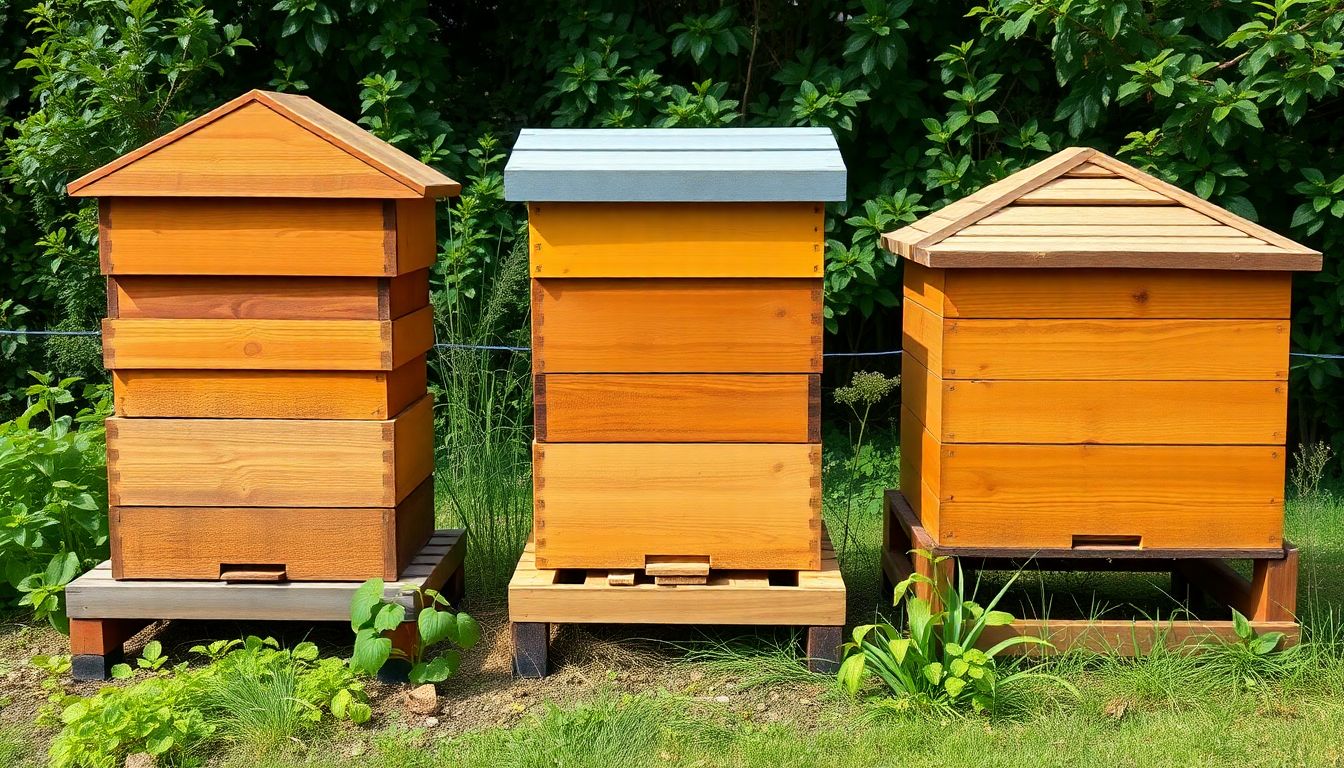
Four bee hive styles compete for every new beekeeper’s attention, and the marketing around each one makes the choice feel bigger than it is. You will hear that a top-bar is gentler, that a Warre is more natural, that a Flow hive lets you skip the mess. For almost everyone starting out, though, one answer is correct and the other three are situational.
This guide names that answer up front, then walks through an honest four-way comparison so you can see the exceptions clearly. The goal is a decision you can act on today rather than a philosophy debate that leaves you more uncertain than when you started. If you are still weighing whether to keep bees at all, begin with the beekeeping for beginners overview first. If you already know you want a bee hive and just need to pick the style, read on.
The short answer: start with a Langstroth
For roughly 95% of beginners, a Langstroth is the right first hive. Most experienced beekeepers and local clubs steer newcomers straight to it, and the reasons are practical rather than sentimental. The parts are universal and inexpensive, the design is standardized so everything is interchangeable between colonies, and it produces the most honey of any common style. Nearly every book, video, and mentor you meet will assume you are running one, which matters enormously when something goes wrong and you need help fast.
There is one real catch: weight. A deep box packed with bees and honey can run 70 to 90 pounds, which is a lot to lift off a stack during an inspection.
The common fix is simple. Run 8-frame medium boxes instead of 10-frame deeps, and you cut the lifting weight substantially while keeping every other advantage. That single swap resolves the main objection people raise against the Langstroth. The Langstroth hive guide covers the box sizes in more depth.
How the four hive types compare
Here is how the four bee hive styles line up on the factors that actually change your first-season experience.
| Factor | Langstroth | Top-bar | Warre | Flow |
|---|---|---|---|---|
| Honey yield | High | Low to medium | Low | High (same as Langstroth) |
| Weight | Heavy (lighter as 8-frame medium) | Light, no stacking | Medium | Heavy (Langstroth-based) |
| Winter survival | Excellent | Poor in cold | Good | Excellent |
| Expandability | Yes (add boxes up) | No | Limited (add to bottom) | Yes |
| Support and parts | Excellent | Moderate | Limited | Moderate |
| Cost | Moderate | Low (often DIY) | Moderate | Highest |
| Learning curve | Moderate, best-documented | Easy | Easy but hard to troubleshoot | Same as Langstroth |
The pattern is clear. The Langstroth wins on the things that keep a first colony alive and a first beekeeper supported, and it only loses on raw box weight, which you can engineer around. Each of the other three trades away something important to gain one specific benefit, whether that is a lighter box, a more natural comb, or a tidier harvest.
For a first season, when you are still learning to read a colony and will lean on mentors and clubs constantly, the support column tends to matter more than any single feature. The sections below show exactly what you give and get with each.
1. Langstroth: the standard for a reason
The Langstroth is the stacked wooden hive you picture when you imagine beekeeping: boxes sitting on a bottom board, removable frames inside, deep boxes for the brood nest and medium or shallow supers for honey. The colony grows and you add boxes upward to give it room.
Its strengths are the reason it dominates. Support and parts are everywhere, so a broken frame or an extra super is a quick, cheap purchase. Honey yields are the highest of any common style, and because the frames are standardized you can transfer comb, brood, and food between colonies whenever you need to balance them. Nearly all beekeeping literature assumes this design, so your learning curve is the best-documented of any hive.
The downsides are honest but manageable. The boxes get heavy, and inspections are more intrusive to the bees than in some hands-off styles. The weight fix is to run 8-frame medium boxes throughout, which most people who worry about lifting end up doing anyway. Getting yours as a complete kit is the simplest path, and the best bee starter kits and best bee hive frames guides cover what to look for.
2. Top-bar: best if you cannot lift heavy boxes
A top-bar hive is one long horizontal box worked at waist height, with wedge-shaped bars across the top instead of full frames. The bees draw their own comb down from each bar, and you inspect one bar at a time. Nothing stacks, so there is no heavy box to hoist.
That makes it genuinely appealing if lifting is a real limitation for you. The inspections are low-intrusion, the comb is natural, and the whole setup is back-friendly. Beekeepers with physical constraints often find it the only comfortable option.
The tradeoffs are significant, though, and worth taking seriously. Top-bar colonies survive poorly in cold winters, and because the box is not expandable they tend to swarm more often as they run out of room. Yields run lower, local support and replacement equipment are harder to find, and the unframed comb can break during handling if you are not careful or the day is warm.
That profile makes the top-bar a specialized choice. Most experienced beekeepers suggest it mainly for warm climates paired with a genuine need to avoid lifting, rather than as a default first hive. Our full top bar hive guide covers Kenyan versus Tanzanian designs, crush and strain harvesting, and why a horizontal Langstroth is often the better way to solve the lifting problem.
3. Warre: natural and hands-off (mind the legal catch)
The Warre is a stack of square boxes with top bars, managed with as little intervention as possible. The distinctive move is that you add new boxes to the bottom rather than the top, mimicking how bees fill a hollow tree from the top down. Enthusiasts value it for its natural comb, high beeswax output, and very low chemical accumulation.
The practical costs are real. Honey yields are low, and lifting the whole stack to slide a fresh box underneath is awkward work. Because you inspect so rarely, it is also harder to catch varroa mites or disease before they get out of hand, which is a meaningful risk for a beginner still learning to read a colony.
There is a legal catch that most beginner guides bury, so read this carefully. A traditional Warre does not hold removable frames, and most US states require hives with removable frames so inspectors can check for disease. That makes a standard Warre non-compliant in much of the country. You can run a framed Warre variant that satisfies the rule, but confirm your state and local rules before buying one.
4. Flow hive: easy harvest, premium price
A Flow hive is a Langstroth fitted with special honey super frames. Turning a key splits the cells inside, and the honey drains out through a tube straight into a jar, with no extractor and no uncapping. Clear observation windows let you watch the bees work. The harvest really is clean and satisfying.
The marketing tends to skip one caveat. The Flow frames automate extraction only. Everything else about the colony is identical to any other Langstroth: you still inspect on schedule, monitor and treat for varroa, feed when the nectar runs short, and manage swarming through the season. The Flow hive makes one afternoon a year easier, not the other fifty weekends.
It also costs the most of any option here, often several hundred dollars more than a standard setup, because of those specialized frames. That math is worth it if you love the idea of tap-to-jar harvesting and will pay for the convenience. It does not make the rest of beekeeping any easier. Our full Flow hive review covers the 2026 prices, the harvesting caveats, and who it genuinely suits.
The bottom line
For almost every beginner, the decision is a Langstroth, and in 8-frame medium boxes if weight is a concern. It gives you the most honey, the deepest support network, standardized parts, and the best odds of getting your first colony through winter. That combination is exactly what a newcomer needs most.
The other three earn a place only in specific situations. Choose a top-bar if you live in a warm climate and genuinely cannot lift heavy boxes. Choose a Warre only if hands-off, natural beekeeping is your priority and a framed version is legal where you live. Choose a Flow if easy harvesting delights you enough to pay a premium for it, understanding that the rest of the management is unchanged.
Once you have picked your style, the cleanest way to buy is a complete kit so the parts all fit together from day one. See the best bee starter kits for options, and the beekeeping equipment guide for everything else you will need alongside the hive.
Frequently asked questions
What is the best beehive for beginners?
A Langstroth. Most experienced beekeepers and local clubs recommend it because the parts are universal and inexpensive, the design is standardized so everything is interchangeable, and it produces the most honey. Nearly every guide and mentor assumes you are using one. The main downside is weight, which you can ease considerably by running 8-frame medium boxes instead of 10-frame deeps.
Is a Flow hive worth it for a beginner?
The harvesting is genuinely easy and clean, but a Flow hive costs much more and its frames automate extraction only. You still inspect, monitor for varroa, feed, and manage swarming exactly as you would on any Langstroth. So it is a convenience at harvest time rather than an easier way to keep bees, and it makes sense only if that convenience is worth the premium to you.
Are Warre hives legal in the US?
Often not as built. Most US states require hives with removable frames so inspectors can check for disease, and a traditional Warre does not comply. You can run a framed Warre variant that meets the rule, but check your state and local rules before buying one, since requirements vary and enforcement is real where foulbrood is a concern.
How much does a beehive cost?
A complete Langstroth typically runs about $150 to $250. Top-bar hives are often cheaper or built DIY, Warre hives fall in the moderate range, and Flow hives cost the most, frequently several hundred dollars, because of their special harvesting frames. Budget separately for protective gear, tools, and the bees themselves, which are usually bought locally rather than online.