Some links on this page are affiliate links. If you buy through one, we earn a small commission at no extra cost to you. As an Amazon Associate we earn from qualifying purchases. Full disclosure.
# Flow Hive Review: Is It Worth It for a Beginner? (2026)
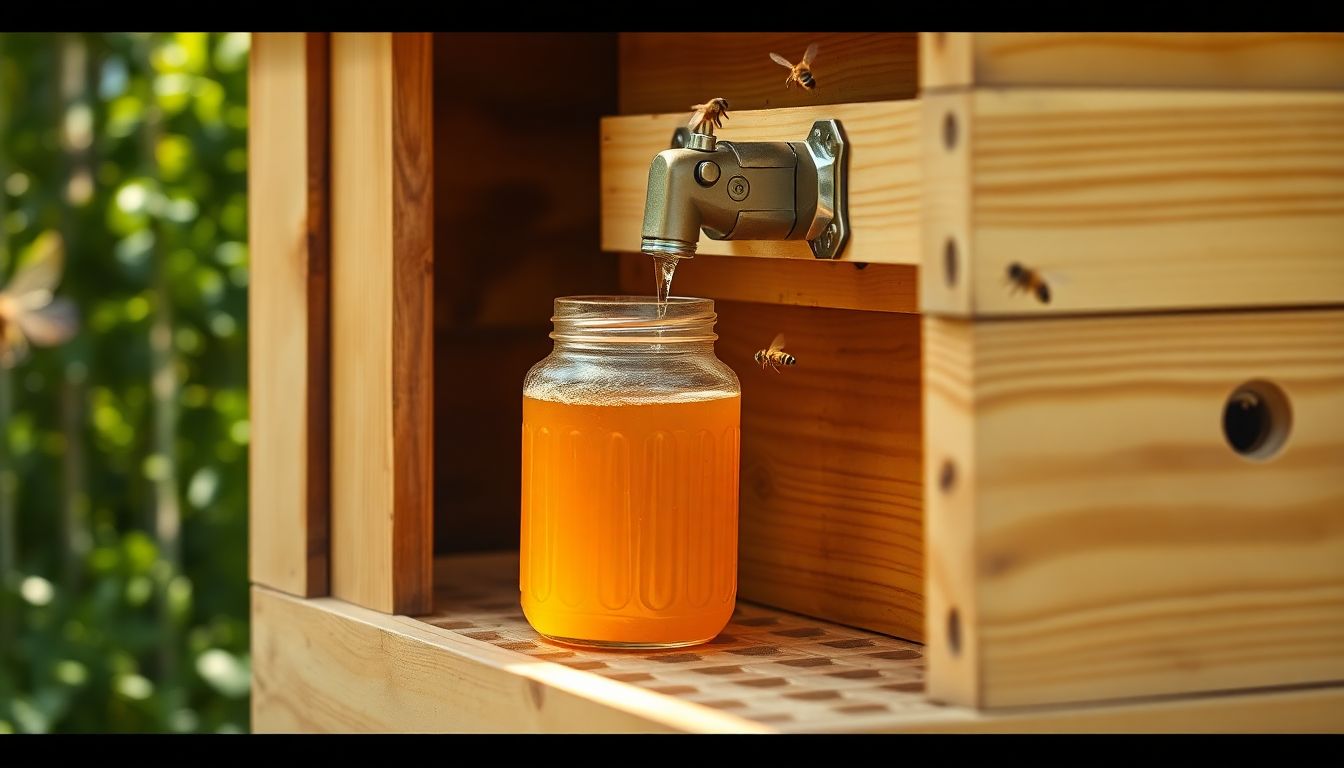
For a lot of people, a Flow Hive video is the reason beekeeping is on their radar at all. The footage is genuinely striking: turn a key, and honey runs out of a tap into a jar while the bees carry on undisturbed a few inches away.
Then you go looking for opinions and run into a wall of beekeepers telling you it is a gimmick, or that it is bad for the bees, or that it teaches you nothing. The truth sits somewhere in the middle and is more useful than either side.
This guide covers what a Flow hive actually is, what it costs in 2026, what it changes about beekeeping, and the far more important question of what it does not change.
How a Flow hive actually works
Strip away the marketing and a Flow hive is a standard Langstroth with one part swapped out.
The brood box at the bottom, where the queen lays and the colony lives, holds ordinary wooden frames. Nothing about it is special. Above it sits the Flow super, and this is where the invention lives: instead of wooden frames, it holds plastic Flow Frames made of partially formed cells.
The bees treat those cells much as they treat foundation. They draw wax over them, fill them with nectar, ripen it, and cap the cells when the honey is ready. When you want to harvest, you insert a key and turn it, which shifts the cell walls internally and splits each cell vertically. The honey drains down through channels inside the frame and out of a tap into your jar. No cutting comb, no uncapping knife, no extractor, no sticky kitchen.
The detail most people miss is that first one. The brood box is completely conventional, which matters a great deal for what follows. Our guide to what is inside a beehive covers how supers and brood boxes divide the work, and the Langstroth hive guide covers the underlying design a Flow is built on.
What it costs in 2026
Flow sells primarily direct through honeyflow.com, and the US pricing looks like this:
| Model | Price | What you get |
|---|---|---|
| Flow Hive Classic | $669 | Flow Frames, observation windows, sloped harvesting, screened baseboard |
| Flow Hive 2 | From $779 | ThermoGrade Paulownia, pest management base with tray, brass hardware, harvesting shelf, gabled roof |
| Flow Hive 2+ | From $899 | Premium western red cedar, same features plus ant guards and optional stand |
| Starter Bundle | About $777 | A hive plus basic protective gear |
| Deluxe Bundle | From $1,017 | Hive plus a fuller accessory set |
Those figures are before tax and shipping, and they are the numbers that make people hesitate. It helps to put them next to the alternative.
A complete conventional Langstroth setup runs about $270. The expensive part of conventional harvesting is the extractor, and most local beekeeping clubs lend or rent one to members, which is why a great many hobbyists never buy their own. Our best honey extractors guide covers that decision, and our cost breakdown sets out what beekeeping costs overall.
So the honest framing is that you are paying roughly a $400 premium for the convenience of never extracting. Whether that is a good deal depends entirely on what you want from the hobby, which the rest of this guide should help you work out.
What a Flow hive does not change
This is the section that matters most, and it is the one the marketing does not emphasize.
A Flow super changes how you get honey out. It changes nothing else about keeping bees.
You still open the brood box and inspect every 10 to 14 days through the warm season, looking for eggs, brood pattern, space, and queen cells. You still monitor varroa on a schedule and treat when your counts say to, and varroa is still the thing most likely to kill your colony over winter. You still feed a new or light colony. You still prepare for winter, check stores, and hope they make it to spring.
Flow’s own inventor, Cedar Anderson, has been clear about this, saying in effect that all the system changes is the honey harvesting and that the rest of beekeeping stays exactly the same, including checking your bees for disease.
That is worth sitting with, because a lot of colonies bought as Flow hives die in their first winter. The equipment is rarely the cause. What kills them is the assumption that an automated harvest means automated beekeeping, and that assumption is what a beginner most needs correcting before they spend anything. Our beehive inspection and varroa mites guides cover the work that does not go away.
What it genuinely does well
The online criticism overshoots, so it is worth giving the design fair credit.
Harvesting without opening the hive is a real benefit. Conventional extraction means pulling frames, brushing bees off, carting boxes somewhere, uncapping, spinning, and cleaning up afterward. A Flow harvest is quiet, contained, and does not disturb the colony.
The observation windows are better than they sound. Being able to see comb and bees at work without opening anything is genuinely useful for learning, and it is excellent with children, who can watch as long as they like without a veil.
There is also a category of person who will not open a hive. If the choice is realistically between a Flow hive and no bees at all, the Flow hive wins that comparison easily. And in a small yard or on a balcony where there is nowhere to run an extractor, it solves a practical problem rather than an imaginary one.
The drawbacks worth knowing
Beyond the price, four things are worth understanding before you buy.
The first is over-harvesting. When taking honey is this easy, it is tempting to take it often, and colonies need their stores to survive winter. This is a genuine risk rather than a theoretical one, and it takes deliberate restraint.
The second is temperature. Honey has to be warm and fluid to drain, so harvesting works poorly in cool weather. In a cold snap, or late in the season, the flow slows to the point of being impractical.
The third is ripeness, and it is the one that catches people out. Honey is ready when the bees cap the cells, which tells you the water content is low enough to store without fermenting. The observation window shows you the outer face of the frame only, so it is not proof that the whole frame is capped. Harvest too early and you get watery honey that can ferment in the jar.
The fourth is plastic, which deserves a fair hearing rather than a reflex. The frames are plastic, and that puts some people off on principle. In practice the bees coat the cells with wax before storing anything, so the honey is not sitting against bare plastic.
Is the lazy beekeeping criticism fair?
This is the loudest objection online, and it is worth landing honestly.
The strong version of the claim, that a Flow hive stops people inspecting their bees, does not hold up. The brood box is a completely standard Langstroth box with standard frames, and everything that matters in an inspection happens down there. A Flow hive is no harder to inspect than any other Langstroth.
The weaker version has something to it. A system built around effortless harvesting can attract people hoping for effortless beekeeping, and a hands-off beekeeper will lose colonies to varroa whether their honey super is plastic or wood. The equipment is not the problem. The expectation is.
Which means the criticism is really an argument about who buys one and why, rather than about the hive itself.
You can add a Flow super to a hive you already own
This gets overlooked, and it is often the smartest route.
Flow supers are sold separately and fit a standard Langstroth. An existing beekeeper can try the harvesting system without replacing anything, and a beginner can start with a conventional hive and add a Flow super in year two, once they know they are going to stay with the hobby and once they have learned to read a brood frame.
That sequence has a lot to recommend it. You learn on standard equipment, you spend less up front while you are still finding out whether beekeeping suits you, and you can still get the harvest experience later. A conventional Langstroth hive kit is the usual starting point, and our starter kit guide covers which bundles are worth the money.
Who it suits, and who should skip it
Worth it if the harvest experience is a genuine part of what draws you to beekeeping, if you have nowhere to run an extractor, if you want the observation windows for children, or if you honestly would not keep bees without it.
Skip it if you are optimizing for cost, if your local club lends an extractor, or if you are buying it in the hope that it makes beekeeping easier overall. That last one is the important one, because easier beekeeping is the single thing it does not deliver.
For most beginners, the advice that holds up is to start with a conventional hive, learn the season, and add a Flow super later if you still want one. Our best beehives guide compares all the styles side by side.
Frequently asked questions
Is a Flow hive worth it?
It depends what you are buying. You are paying roughly $400 over a conventional setup for the convenience of harvesting without an extractor. If extraction space or the harvest experience matters to you, that can be money well spent. If your local club lends an extractor and you are watching costs, it is poor value.
Do you still have to inspect a Flow hive?
Yes, exactly as often as any other hive. The brood box is a standard Langstroth box with standard frames, and brood inspection, varroa monitoring, and disease checks all happen there. The Flow system only replaces the honey super, so it changes harvesting and nothing about routine management.
Is a Flow hive bad for the bees?
Not inherently. The bees draw wax over the cells and cap the honey normally, and the brood nest is entirely conventional. The risks that do exist come from beekeeper behavior rather than equipment, mainly harvesting too often and leaving the colony short of winter stores, or assuming the hive removes the need for mite management.
Your next step
If you are weighing all the options rather than just this one, our best beehives guide compares Langstroth, top-bar, Warre, and Flow side by side. To understand what is happening inside any hive before you choose, start with inside a beehive. And if you decide to begin conventionally, our best beginner starter kits guide covers pricing a first setup.
Sources
- Flow Hive US, current models and pricing. Prices quoted here were current in July 2026 and change, so check before budgeting.
- Flow, advantages and disadvantages, the manufacturer’s own account of the tradeoffs.
- PerfectBee, a detailed look at the Flow Hive, an independent walkthrough of how the system works in practice.