Some links on this page are affiliate links. If you buy through one, we earn a small commission at no extra cost to you. As an Amazon Associate we earn from qualifying purchases. Full disclosure.
An extractor is the one big-ticket tool most new beekeepers rush to buy, then watch it collect dust in the garage. It is heavy, it is not cheap, and in your first season it often spins nothing but air. The urge to buy one early is common, and it is worth resisting.
Before you spend a couple hundred dollars, two questions matter. Do you actually need a honey extractor this year? And if you do, which one makes sense for the size of your operation?
This guide answers both, with real brands and real prices, so you buy once and buy right. If you are still setting up your first colonies, start with our beekeeping for beginners guide first.
Do you even need an extractor yet?
Here is the honest answer most review sites bury: probably not, at least not this year. A single hive in its first season usually gives you little or no surplus honey. Many first harvests are just a few frames, and you do not need a machine for that.
You have two cheaper paths. Most local beekeeping clubs rent a quality radial extractor for about $20 to $50 a day, which beats owning one for a single small pull. Or you can crush-and-strain: mash the comb, run the honey through a sieve, and skip the machine entirely.
Crush-and-strain has one real cost. It destroys the comb. That matters more than it sounds, because drawn comb is one of the most valuable things in your hive. Bees spend roughly 6 to 8 pounds of honey to build 1 pound of beeswax, so comb you can hand back to them saves the colony an enormous amount of work.
That is the case for owning an extractor eventually. It leaves the comb intact for the bees to refill, which speeds up every harvest after the first.
Buying tends to pay off once you run 3 or more hives with regular harvests, usually cost-effective within 2 to 3 seasons. Below that, rent or strain and put the money toward more hives. Our hive management guide covers where the harvest fits in your season.
How an extractor works
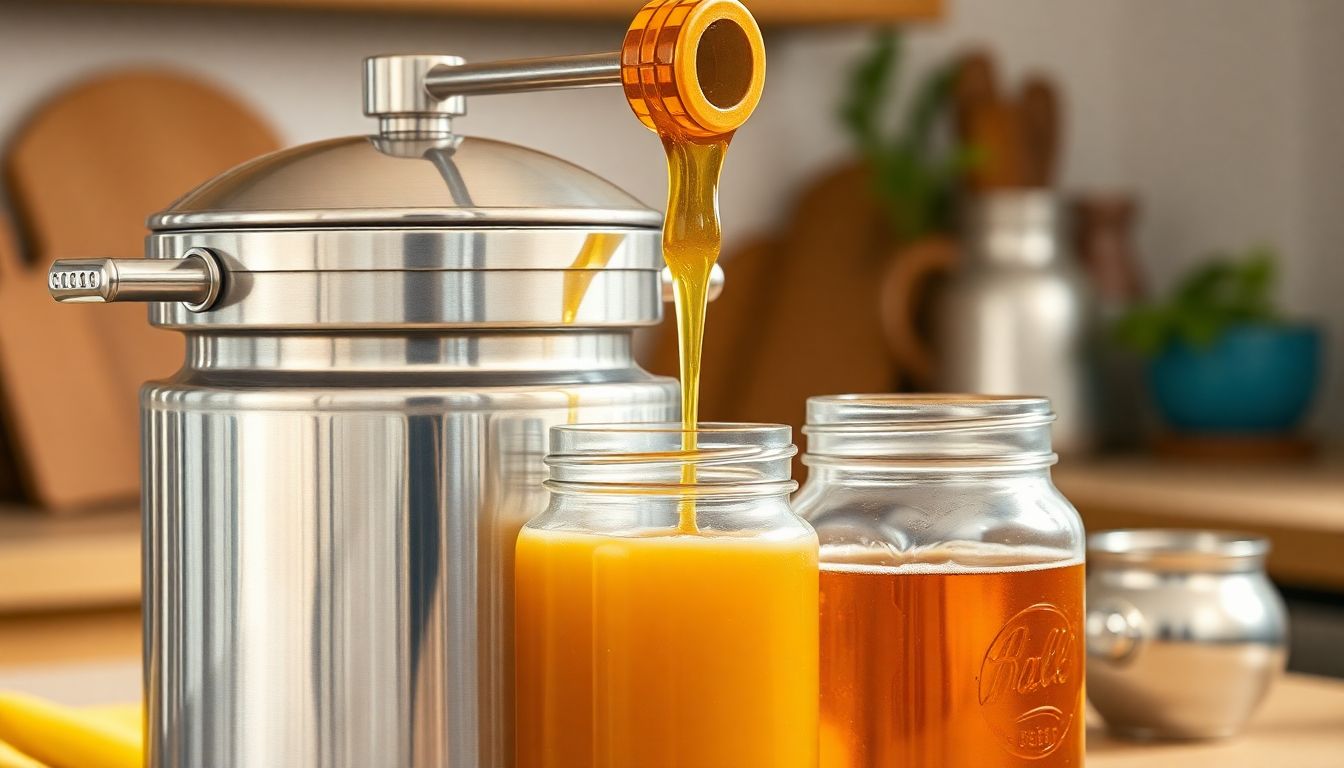
An extractor is a centrifuge, nothing more complicated than that. You uncap the frames to open the wax cappings, load them into a drum, and spin. Centrifugal force throws the honey against the drum wall, where it runs down and drains out a gate valve at the bottom.
The comb stays intact through the whole process. That is the entire point. You hand the emptied frames back to the bees and they refill them instead of rebuilding from scratch. The frames you spin are ordinary hive frames, so any extractor you buy needs to fit the deep and medium sizes you already run.
Manual or electric? Tangential or radial?
Two choices decide which extractor is right for you, and both come down to how many hives you keep. Neither is complicated once you see the tradeoff.
Manual means hand-cranked. It is cheaper, needs no power, and lets you control the spin speed, which protects fragile comb from blowing out. The downside is effort, since you are the motor.
Electric spins hands-free at variable speed and processes more frames without wearing you out, which starts to matter at about 3 or more hives. For 1 to 3 hives, a manual is almost always enough.
Tangential versus radial is about how the frames sit. A tangential extractor faces one side of each frame out, so you spin one side, flip every frame, and spin the other. It is cheaper and extracts thoroughly, which is fine for 1 to 3 hives. A radial extractor mounts frames like spokes on a wheel and spins both sides at once, faster and gentler on comb, but it is more expensive and only worth it at 4 or more hives, usually as an electric model.
For a beginner, the answer is a manual tangential. The extra flipping is no burden on a handful of frames, and you save real money.
1. Best for one hive: Little Giant 2-frame manual
If you keep a single hive and want the cheapest honest entry point, the Little Giant 2-frame manual is it. It runs around $70, which is about as low as stainless steel goes.
The drum is stainless with a clear plexiglass lid, so you can watch the honey fly and stop before you overspin. It hand-cranks, holds two frames tangentially, and drains through a basic gate valve. There is no motor and nothing fancy.
Two honest caveats. It ships with no real instructions, so plan to watch a video the first time. And at this price the build is basic, so treat it gently. For one hive and a few frames a year, it does the job without pretending to be more.
Little Giant 2-frame extractor
2. Best budget for 1-2 hives: Happybuy 2-frame manual
Step up about twenty dollars and the Happybuy 2-frame manual gives you a noticeably more usable machine for around $90. This is the one most experienced beekeepers point beginners toward when they are running one or two hives.
It uses food-grade stainless steel on the honey-contact surfaces, the crank turns smoothly, and the gate valve actually seals and pours cleanly. For a backyard harvest of a few supers a season, it covers everything without the frills.
The weak spot is the stand. The feet are flimsy and the whole unit can walk across the floor when you crank hard. The fix is simple: bolt it down or clamp it to a sturdy table before you spin. Do that and it is a genuinely good budget extractor.
3. Best value 2-frame: VIVO 2-frame manual
The VIVO BEE-V002 2-frame manual is the pick when you want a 2-frame extractor that feels solid and plan to keep it for years. It runs about $100 to $130, a small premium that buys real quality.
You get thicker stainless, two carrying handles that make a full drum manageable, and a gate valve that seals well and does not drip. It is still a hand-cranked tangential machine sized for 1 to 2 hives, but it is the one that feels least like a compromise.
Watch for sharp edges on some units, especially around the lid rim and the tank top. Run your hand around it once before first use and file down anything rough. Past that, this is the best-value 2-frame manual on the list.
4. Best step-up at 3+ hives: VEVOR 4-frame electric
When hand-cranking stops being fun, the VEVOR 4-frame electric is the natural jump. At around $200 it is the point where a motor starts earning its keep, which lines up with running 3 or more hives.
The variable-speed motor does the spinning while you keep uncapping the next batch, so the whole harvest moves faster. Holding four frames, it processes a full super in roughly 3 spins instead of the 5 or so a 2-frame manual needs. The slow-start speed control also protects comb from blowing out.
This is a real step-up, not a beginner tool. If you are still at one or two hives, the extra capacity sits idle and the money is better spent elsewhere. At 3 to 4 hives with multiple harvests a year, it changes harvest day from a chore into a couple of easy hours.
VEVOR 4-frame electric extractor
What to look for (and the tools you also need)
Whatever you buy, a few non-negotiables separate a machine you keep from one you regret. Use this as a quick checklist before you order.
- Food-grade stainless steel on every honey-contact surface. Avoid plastic drums, which scratch, stain, and are hard to sanitize.
- Enough gate-valve clearance to slide a 5-gallon bucket underneath, so you can drain straight into a bottling bucket.
- Variable speed on any electric model, because a slow start prevents comb blowout.
- Easy cleaning: minimal internal welds, a removable honey gate, and a smooth interior. Rinse it immediately after use before honey sets.
- Frame compatibility, confirmed for both your deep and medium frames.
An extractor is not the whole harvest kit. You also need an uncapping knife or fork to open the wax cappings before spinning, plus a strainer or sieve and a food-grade bucket with a honey gate to bottle from. For the full picture of what to buy and what to skip, see our beekeeping equipment guide.
The bottom line
For most beginners, the smartest move in year one is to own no extractor at all. Rent one from your club for $20 to $50 a day, or crush-and-strain your first few frames, and put the savings toward more bees or a second hive.
When you are ready to buy, keep it simple. For 1 to 2 hives, a 2-frame manual stainless extractor is the answer, and the Happybuy or the VIVO are the two most beekeepers recommend. Once you hit 3 or more hives and cranking by hand loses its charm, jump to the VEVOR 4-frame electric.
Two rules cover the rest. Buy stainless, never plastic, and confirm the gate clears a 5-gallon bucket before you order. Get those right and the machine will outlast every hive you own. From here, tighten up the rest of your setup with our hive management guide and, if you are still building out gear, our bee feeders rundown.
Frequently asked questions
Do I need a honey extractor in my first year?
Usually not. First-year harvests are small or nonexistent, so renting a club extractor for about $20 to $50 a day or using crush-and-strain on a few frames makes more sense than buying. Buy once you run several hives and harvest regularly, which is when the machine actually pays for itself over two to three seasons.
Is a manual honey extractor good enough?
For one to three hives, yes. A 2-frame manual stainless extractor handles a backyard harvest fine, and you control the spin speed to protect the comb. Electric only pays off once you are processing many frames at a time, around three or more hives, where hand-cranking stops being worth the fatigue.
What size honey extractor should I buy?
A 2-frame model is the right starting point for one or two hives. Step up to a 4-frame electric at three to five hives, and consider a larger radial extractor only once you are running many colonies with multiple harvests a year. Buying bigger than you need just wastes money and storage space.
Tangential or radial extractor for a beginner?
Tangential. It costs less and extracts thoroughly, and for one to three hives the extra flipping of frames is no real burden. Radial extractors spin both sides at once and are faster and gentler on comb, but they cost more and only make sense at about four or more hives.