Some links on this page are affiliate links. If you buy through one, we earn a small commission at no extra cost to you. As an Amazon Associate we earn from qualifying purchases. Full disclosure.
# Top Bar Hives: How They Work and Who They Suit (2026)
Two things pull people toward top bar hives. There are no heavy boxes to lift, which matters more than beginners expect once they learn a full deep can weigh 80 pounds. And the bees build their own comb from scratch, with no foundation and no plastic, which appeals to anyone who wants the hobby to feel less like equipment management.
Before going further, one piece of vocabulary needs sorting out. Online, people use top bar and horizontal almost interchangeably, and they are not the same thing. That distinction turns out to matter a great deal, and for a lot of people asking about top bar hives, the honest answer is a different hive entirely. This guide covers how a top bar works, what the tradeoffs actually are, and which of the two you probably want.
How a top bar hive works
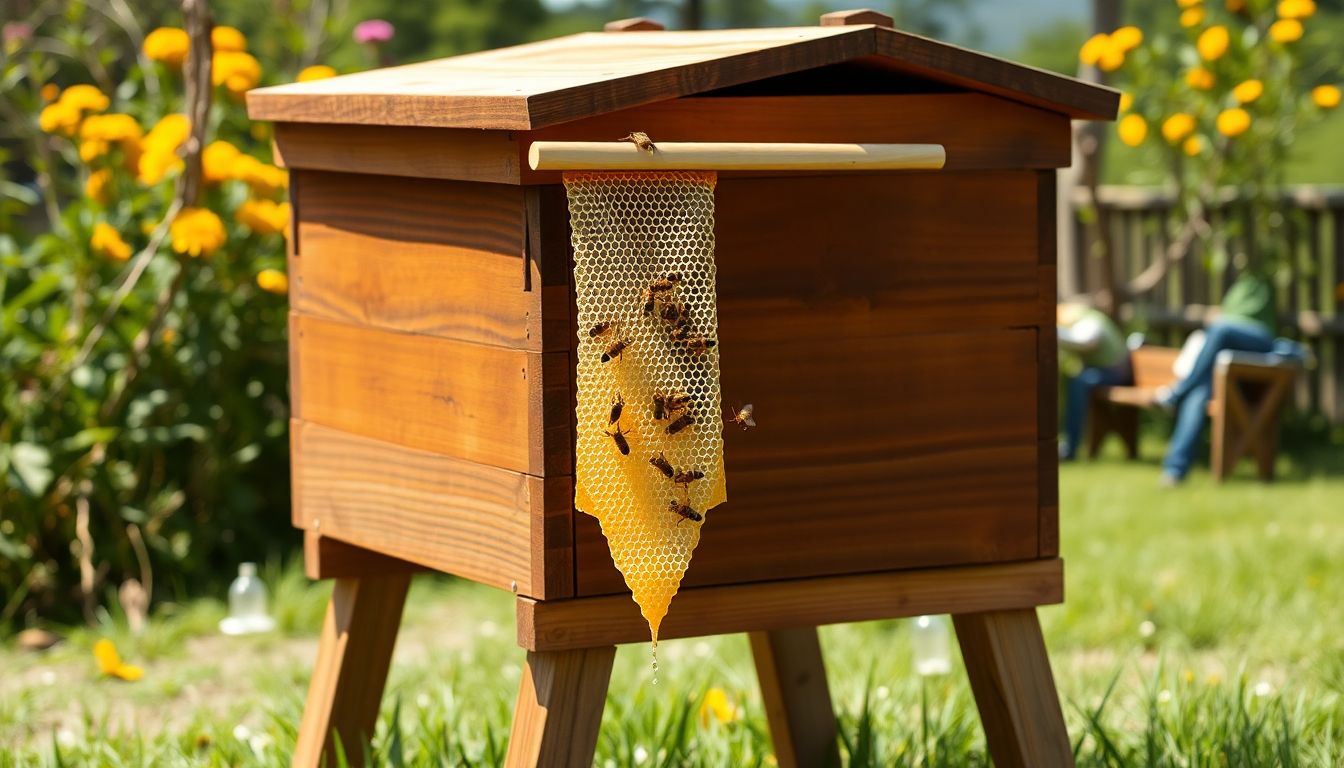
A top bar hive is close to the simplest hive design in use. Picture a long box on legs with a lid, holding one continuous cavity rather than a stack of separate boxes.
Across the top of that cavity sit wooden bars, laid side by side like floorboards. Each bar has a ridge or groove along its underside to encourage the bees to start building there. The bees then draw comb downward from each bar, shaping it themselves without foundation to guide the cell size or a wooden frame to enclose it.
You work the hive from the side, lifting out one bar at a time with its comb hanging beneath. Nothing gets stacked, nothing gets moved off to reach what is underneath, and the colony stays largely covered while you look at a single comb.
That is the entire concept. Our guide to what is inside a beehive covers how bees organize comb in any hive, and our best beehives guide sets top bar hives against the other styles.
Kenyan or Tanzanian?
There are two common shapes, and the choice affects how pleasant the hive is to work far more than the name suggests.
| Kenyan (KTBH) | Tanzanian | |
|---|---|---|
| Shape | Sides slope inward from top to bottom, trapezoidal | Straight vertical sides, a plain rectangular box |
| Comb attachment | Walls fall away from the comb edge, so bees rarely glue comb to the sides | Walls stay a constant distance from the comb, so bees attach it more often |
| Inspection | Bars usually lift straight out | Attachments often need cutting first |
| Build | Slightly more work to make | Simplest and cheapest to build |
The sloped sides of a Kenyan hive are doing real work. As the bees build comb down from a bar, the wall recedes away from the comb’s edge, and that gap discourages them from fixing the comb to the side of the hive. Bars come out cleanly.
In a Tanzanian hive the vertical wall stays right alongside the comb, and bees frequently attach the two. Then every inspection starts with running a hive tool down each side to sever the connection, which risks breaking the comb, spilling honey into the hive, and thoroughly annoying the colony. If you are choosing rather than building to a plan you already have, most beekeepers would steer you to the Kenyan shape.
What top bar hives are genuinely good at
The case for them is real, and worth stating clearly before the drawbacks.
Nothing needs lifting. The whole colony lives in one cavity that you work from the side, so there is no point in the season where you have to hoist an 80 pound box off a stack. For anyone with back trouble, limited grip strength, or simply no wish to wrestle heavy equipment, that alone can decide the question.
They are cheap, and they are the friendliest hive design to build yourself. A serviceable top bar hive is a box, some legs, a lid, and a row of bars, which is well within reach of basic woodworking, and our guide to building a beehive covers materials and plans. A ready-made top bar hive is also inexpensive compared to a full Langstroth setup.
Inspections are gentler. Opening a small section of the hive at a time, rather than cracking apart boxes propolized together over months, disturbs the colony less and tends to make for calmer bees. And watching a colony build its own comb, unguided by foundation, is genuinely one of the more interesting things in beekeeping.
The tradeoffs nobody mentions in the videos
Here the picture gets more complicated, and these are the points that thin articles tend to skip.
The comb is fragile. It hangs from the bar alone, with no four-sided frame supporting its edges, so a full comb of honey is both heavy and unsupported. Combs can and do break off their bars when handled carelessly, and heat makes it worse, which is why beekeepers avoid harvesting on very hot days.
That fragility rules out a centrifugal extractor entirely. Spinning an unframed comb destroys it.
Yields run lower than a framed hive. Part of that is space, since a top bar holds what it holds and you cannot simply add another box. The larger part is that the comb is harvested with the honey, so the colony rebuilds comb every season rather than refilling drawn comb it already owns. Building wax costs bees a great deal of honey, and that energy comes out of your harvest.
Nothing interchanges. Bars, boxes, and combs do not fit Langstroth equipment, so used gear is harder to find, spares are harder to source, and you cannot swap a frame of brood with a neighbor to prop up a struggling colony.
And most clubs and mentors run Langstroths. That means the person willing to come and look at your hive is fluent in a different system, which is a thin place to be in a first season when you most need someone experienced looking over your shoulder.
Overwintering is the real weakness
This one deserves separating out, because in cold regions it is the argument that decides the question.
In a vertical hive, the winter cluster moves upward into stored honey as it eats, which is the direction heat naturally travels anyway. A horizontal hive asks the cluster to move sideways instead, across a long cavity that holds heat poorly by comparison.
The consequence in hard winters is that top bar colonies are lost outright or come through to spring badly weakened. There is a second cost too: the honey the colony needs to survive a horizontal winter is a large share of what you might otherwise have taken, so cold-climate top bar beekeeping tends to mean small harvests even in a good year.
In mild climates this matters far less, and plenty of southern beekeepers run top bars happily. Our winter beekeeping guide covers what any colony needs to get through the cold.
Harvesting: crush and strain
Since an extractor is off the table, top bar honey comes out by crush and strain.
You cut the comb away from the bar, crush it in a bucket, and strain the honey from the wax through a sieve or a cloth bag. That is genuinely the whole process. It needs no machinery, which removes the single most expensive piece of optional equipment from your budget, and our best honey extractors guide covers what you are choosing not to buy.
The cost is the comb, which the bees must build again. The compensation is that you finish with a real beeswax harvest alongside honey that carries more pollen than extracted honey does, which many people prefer.
Top bar or horizontal Langstroth?
This is the part worth reading twice, because it resolves the confusion the introduction flagged.
A horizontal Langstroth, often called a long hive, is not a top bar hive. It is a Langstroth box made wider, holding twice or more the usual number of frames, with the same depth and length as any standard box. Inside it are ordinary Langstroth frames.
That single difference carries a lot. You get the identical ergonomic benefit, since you still work from the side and never lift a box, but you keep everything standard frames provide. The frames go through an extractor. They interchange with any vertical Langstroth, so you can move brood between hives, make up five-frame nucs to sell or to replace a loss, and buy or borrow equipment from anyone. The comb is supported on four sides, so it survives handling and transport.
For a great many people asking about top bar hives, the actual problem they are solving is that they cannot or will not lift heavy boxes. A long Langstroth solves exactly that problem without the fragile comb, the lost interchangeability, the lower yields, or the wintering penalty. Very little beginner content points this out, and it deserves to be said plainly. A conventional Langstroth kit is the starting point, and our Langstroth hive guide covers the design.
So the deciding question is what you actually want from the hive. If natural comb and simplicity appeal on their own merits, a top bar hive earns its place. If the goal is only to stop lifting boxes, a long Langstroth does that job better and costs you less elsewhere.
Are top bar hives legal?
Generally yes, with a caveat worth checking.
Most US states require that comb be removable so it can be inspected for disease, which is the rule that makes fixed-comb hives a problem. A top bar hive satisfies that in practice, since every comb lifts out individually on its own bar and can be examined.
The nuance is that some state statutes are written around movable frames rather than movable comb, and a top bar hive has bars rather than frames. In practice this is rarely enforced against top bar keepers, but the wording varies by state and it costs nothing to confirm with your state apiarist or local club before you build. Our guide to keeping bee hives in your backyard covers the wider rules.
This is also what separates a top bar hive from a skep, the woven straw dome from old illustrations. In a skep the comb is fixed and cannot be inspected at all, which is why skeps are not legal for keeping bees in much of the country and survive as decoration.
Who it suits, and who should skip it
A top bar hive suits you if lifting is genuinely the blocker and you want the simplest, cheapest hive available, if natural comb matters to you as a principle rather than a preference, if you live somewhere with mild winters, or if you enjoy building your own equipment.
Give it a miss if you live in a cold winter region, if honey yield is a significant part of why you want bees, if you want equipment that interchanges with everyone else’s, or if this is your first season and you will be leaning on local mentoring to get through it.
And if lifting is the only real issue, look hard at a long Langstroth first. Our best beginner starter kits guide covers conventional setups, and our Flow hive review covers the other alternative people commonly consider.
Frequently asked questions
What is a top bar hive?
A long, single-cavity hive with wooden bars laid across the top instead of framed boxes. Bees build natural comb downward from each bar with no foundation, and the beekeeper works from the side, lifting one bar at a time. There are no boxes to stack or lift.
Do top bar hives produce less honey?
Usually yes. Space is limited compared to a hive you can keep adding boxes to, and because the comb is harvested along with the honey, the colony rebuilds comb every season instead of refilling drawn comb. Making wax costs bees a lot of honey, and that shows up in your harvest.
What is the difference between a top bar hive and a horizontal Langstroth?
A top bar hive uses bars and natural comb with no frames. A horizontal Langstroth is simply a wider Langstroth box holding standard frames. Both avoid heavy lifting, but the horizontal Langstroth keeps centrifugal extraction, interchangeable equipment, and sturdier comb.
Your next step
For the full four-way comparison of hive styles, see our best beehives guide. For the standard design that most advice assumes, see the Langstroth hive guide. And for the other alternative that gets people’s attention, our Flow hive review covers whether that one is worth the premium.